Burning Smell from Car but Not Overheating: Causes, Risks, and Solutions
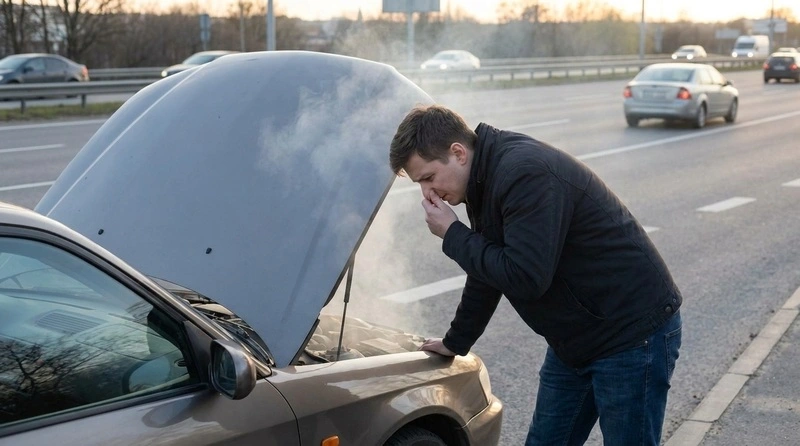
You park your car after a normal drive, open the door, and get hit with a sharp burning smell. You quickly check your dashboard, but the temperature gauge sits right in the middle where it belongs. No warning lights are flashing, and no steam is rising from the hood. It is tempting to sigh with relief and walk away, assuming everything is fine.
Sadly, a normal temperature gauge does not mean your car is out of the woods.
Vehicle engines have separate systems for cooling, braking, power delivery, and electrical power. A burning odor is your car’s early warning system telling you that fluid is leaking, rubber is dragging, or wires are melting somewhere under the hood. Ignoring these subtle odors often turns a small, quick fix into an expensive breakdown.
This guide breaks down why your car gives off a burning smell even when it is not overheating, how to identify the exact source, and what to do next.
1. Is It Normal to Have a Burning Smell Without Overheating?
The short answer is no—a persistent burning smell is never normal for a healthy vehicle. However, there are a few rare moments where a brief scent is harmless.
If your car has been sitting all summer, turning on the heater for the first time in the fall will burn off settled dust. This creates a dry, burnt-dust smell through the cabin vents that should fade after a few minutes.
Similarly, brand-new cars or recently replaced exhaust pipes often emit a light chemical odor during their first few drives as factory coatings cure under heat. Small drips from a recent engine oil change might also burn off hot metal components within a day or two.
Beyond these rare situations, a recurring burning smell points to an active mechanical issue.
Why Odors Occur Before Overheating
Your engine’s cooling system only monitors the temperature of the engine block and head. Components like your brake pads, manual transmission clutch, serpentine belt, and wiring harness sit outside this cooling loop.
If a brake caliper locks up or electrical insulation melts, those parts can reach scorching temperatures and fill the air with smoke long before your engine coolant ever gets hot.
2. Fast Diagnostic Guide: Matching Smell Types to Causes
Different automotive fluids and materials produce distinct odors when exposed to high heat. Use this quick reference guide to match the scent you are smelling to the likely culprit:
| Odor Profile | Likely Cause | Primary Components Involved | Urgency Level |
|---|---|---|---|
| Thick & Smoky | Engine Oil Leak | Exhaust Manifold, Valve Cover Gasket, Seals | High |
| Sharp & Rubbery | Slipping Belt / Friction | Serpentine Belt, Tensioner, Misaligned Pulley | High |
| Acrid / Chemical Plastic | Electrical Short / Melted Insulation | Wiring Harness, Fuse Box, Alternator | Critical |
| Burnt Paper / Organic | Clutch Friction Wear | Clutch Disc, Flywheel (Manual Transmission) | Medium – High |
| Harsh Chemical | Overheated Brakes | Brake Pads, Rotors, Seized Caliper | High |
| Sweet / Maple Syrup | Coolant / Antifreeze Leak | Radiator Hose, Heater Core, Water Pump | Medium – High |
| Foul Burning Plastic | Foreign Undercarriage Debris | Melted Plastic Bag on Exhaust Pipe | Low – Medium |
3. The 10 Most Common Causes of a Burning Smell in Your Car
1. Oil Leaking Onto Hot Engine Components
Engine oil leaks are the most common reason drivers notice a burning scent without high engine temperatures.
As gaskets dry out over time, oil seeps past the valve cover gasket or main seals. Instead of pooling harmlessly on the ground, this oil frequently drips onto the hot exhaust manifold. Because exhaust pipes heat up rapidly, the oil burns instantly.
This creates a thick, smoky smell that drifts into the cabin. Left unfixed, continuous oil leaks will drop your oil levels and accelerate engine wear.
2. Overheated Brakes and Stuck Calipers
Brake pads naturally generate heat through friction to slow your vehicle down. However, heavy mountain driving or towing heavy loads can push brake components past their safe heat limits.
If you smell burning brakes during normal city driving, you may have a seized brake caliper. A stuck caliper continuously presses the brake pad against the spinning rotor.
This relentless friction cooks the pad material, degrades your stopping power, and produces a harsh chemical smell near the wheels.
3. A Slipping or Overused Clutch
Drivers with manual transmissions often encounter a burning odor that smells like scorched paper or burnt carpet. This happens when the clutch disc slips against the flywheel instead of locking tightly into place.
Riding the clutch pedal, navigating stop-and-go traffic on steep inclines, or carrying heavy loads creates extreme friction.
If you catch a whiff of this scent occasionally on a tricky hill start, it is not an emergency. However, a constant burnt-paper smell means your clutch disc is wearing thin and needs attention before you lose the ability to shift gears.
4. Electrical Shorts, Frayed Wires, and Blown Fuses
A sharp, chemical odor like melting plastic is a severe warning sign that demands immediate action.
Short circuits, loose grounds, and overloaded electrical components cause wire insulation to overheat and melt. Melting plastic and copper wiring are leading causes of vehicle fires.
If you notice this smell coming from under the dashboard or through your climate control vents, pull over and turn off your car right away.
5. Slipping or Misaligned Drive Belts
Your vehicle relies on a serpentine belt to turn key accessories like the alternator, power steering pump, and air conditioning compressor.
If a pulley bearing freezes or the automatic belt tensioner loses strength, the belt stops spinning smoothly. Instead, it drags across static metal surfaces.
This heavy friction generates intense heat, stripping rubber off the belt and releasing a sharp burning rubber smell along with high-pitched squealing noises under the hood.
6. Foreign Debris Melted on the Exhaust System
Sometimes the source of a foul odor is not a mechanical failure at all, but road trash. Lightweight plastic shopping bags, dry autumn leaves, or stray road debris can easily blow under your vehicle while driving.
If this material gets caught against your catalytic converter or exhaust pipe, the extreme heat instantly melts or chars the material. This produces a pungent, burning-plastic stink that grows stronger as your exhaust system heats up.
7. Early-Stage Coolant or Antifreeze Leaks
When a coolant hose splits completely, your engine will overheat within minutes. However, hairline cracks or loose hose clamps often leak slowly at first.
When small drops of coolant spray out, they hit hot engine surfaces and vaporize instantly. This creates a distinctive, sweet maple-syrup scent before your cooling system loses enough fluid to trigger a high-temperature reading on your dashboard.
Monitoring your coolant level regularly will help you catch these small leaks early.
8. Transmission Fluid Dripping onto the Exhaust
Transmission fluid lubricates and cools the delicate gears inside your transmission. Over time, transmission pan gaskets or axle seals can degrade, allowing fluid to seep out.
When leaking transmission fluid drips onto hot exhaust pipes, it burns off with a slightly sweet, oily odor. Low fluid levels lead to hard gear shifts, delayed acceleration, and eventual gear failure.
Addressing transmission leaks promptly prevents costly internal transmission rebuilds down the road.
9. Climate Control System (HVAC) & Heater Core Issues
If you only notice a burning odor when turning on your climate control, the issue sits inside your HVAC housing. Off-season dust settling on heater coils creates a brief burnt-dust odor every autumn.
However, a sweet smell blowing through the vents points to a leaking heater core inside your dashboard.
On the other hand, a plastic smell that appears alongside weak airflow usually means your cabin air filter is clogged with debris or your blower motor motor is overheating.
10. Failing Alternator Bearings or Battery Issues
Your alternator generates electricity while the engine runs, but its internal bearings wear down over time. When an alternator bearing seizes, the serpentine belt drags forcefully across the stuck pulley, creating a mixture of burning rubber smells and electrical odors.
Additionally, a faulty voltage regulator can overcharge your battery, boiling the internal acid solution and melting nearby wiring insulation.
You will often notice dimming headlights or a battery warning light along with this scent.
4. Immediate Action Plan: What to Do When You Smell Burning
Detecting a persistent burning odor requires a quick, methodical response to protect yourself and your vehicle:
- Turn Off Climate Control: Turn off your heater or A/C immediately. This stops the HVAC system from pulling toxic fumes or smoke directly into the cabin. Roll down your windows to get fresh air.
- Pull Over Safely: Do not push through the drive to reach your destination. Signal clearly, pull onto a wide highway shoulder or safe parking lot, engage your parking brake, and turn off the ignition.
- Perform a Safe Visual Check: Keep the engine off and step outside the vehicle. Look beneath the car for dripping fluids, rising smoke, or plastic bags caught near the exhaust.
Safety Warning: If you see smoke coming from beneath the hood, do not open it right away. Opening the hood introduces oxygen, which can turn a smoldering electrical short or oil drip into an active fire. Wait at least five minutes for heat to dissipate.
- Document the Symptoms: Write down when the smell started, whether it happened during hard braking or accelerating, and if any dashboard lights turned on. This context helps your mechanic complete an accurate car diagnostic check.
5. Professional Repairs, Maintenance, and Estimated Costs
Ignoring minor smells allows cheap fixes to snowball into major repairs. Here is what you can expect when addressing common root causes professionally:
- Oil Leak Repairs (Gaskets & Seals): Replacing a leaking valve cover gasket typically costs between $150 and $500, depending on labor access.
- Brake System Service: Replacing overheated brake pads and warped rotors runs $250 to $600 per axle. Replacing a seized brake caliper adds $200 to $400 per wheel.
- Drive Belt Replacement: Replacing a worn serpentine belt and tensioner costs $100 to $300.
- Coolant System Repairs: Fixing a cracked radiator hose or water pump costs between $200 and $900.
- Clutch Replacement: Replacing a worn clutch assembly on a manual car ranges from $1,200 to $2,200 due to heavy labor demands.
The Value of Engine Bay Detailing
After resolving the mechanical issue, residual oil or burnt fluid grime often stays stuck to engine surfaces, continuing to smell every time the engine gets hot.
Scheduling professional engine bay detailing strips away baked-on sludge using safe degreasers and dry steam. A clean engine bay eliminates lingering odors and makes any new fluid leaks instantly visible before they cause trouble.
Frequently Asked Questions (FAQs)
A burning plastic smell without engine overheating usually signals short-circuiting wires, melting insulation near your fuse box, or road debris like a plastic bag stuck to your hot exhaust pipe.
Yes. Small oil drips landing on your exhaust manifold burn off immediately, generating strong smoke and odors long before your oil level drops enough to illuminate a low oil pressure light.
No. A slipping belt generates high friction heat that snaps the rubber. If the belt breaks while driving, you instantly lose power steering, alternator charging, and engine cooling capabilities.
Overheated brakes produce a harsh, chemical-metallic smell that concentrates around your wheel wells. A worn clutch produces a distinct burnt-paper odor inside the cabin, usually accompanied by engine revs climbing without your car speeding up.
Car detailing removes the residual smells and grime left behind after a repair, like oil baked onto the exhaust. However, detailing cannot fix active mechanical faults—you must repair the underlying leak or component first.