Is Leasing an Electric Car Better Than Buying One?
Choosing how to finance your next vehicle feels harder than it used to be. If you are shopping for a battery electric vehicle, the decision between signing a lease or taking out an auto loan requires looking closely at how the automotive market has shifted. With rapid advancements in battery technology and fluctuating market values, the traditional rules of car ownership no longer apply quite the same way.
Whether you are eyeing a brand-new crossover or a sleek sedan, understanding the financial mechanics helps you avoid costly mistakes. Let’s break down the core differences in plain English so you can figure out which path makes sense for your garage and your bank account.
The Real Cost of EV Depreciation
One of the biggest advantages of leasing an electric car is that you completely sidestep the severe depreciation curve that hits battery-powered vehicles. Unlike traditional internal combustion engine vehicles, electric cars have seen volatile resale values over the past few years.
As automakers ramp up production and introduce longer-range battery packs, older models lose value faster on the secondary market. When you finance and buy a car, you absorb every single dollar of that drop when it comes time to trade it in or sell it. With a lease, the financing company takes on that residual risk. You simply drive the vehicle for thirty-six months and hand the keys back, letting someone else worry about what the car is worth.
Technology Changes Faster Than Ever
If you purchase a gas-powered car, a five-year-old model functions essentially the same as a brand-new one. Electric vehicles live by different rules because they rely heavily on software architecture, thermal management systems, and rapidly evolving charging speeds.
A top-tier electric SUV today might boast a three-hundred-mile range, but solid-state batteries and faster charging hardware are advancing quickly. Drivers who buy their vehicles outright often feel stuck with aging tech as infrastructure and vehicle capabilities improve. Leasing acts as a built-in safety net, allowing you to upgrade to a fresh model every three years without dealing with the hassle of private party sales or negative equity on an auto loan.
Understanding Manufacturer Incentives and Cash Offers
The financial ecosystem surrounding alternative fuel vehicles has evolved significantly. While federal point-of-sale tax credits underwent major changes, automakers have adapted by introducing aggressive manufacturer lease cash incentives.
When you sit down to review a finance contract versus a lease agreement, you will notice that brands heavily subsidize monthly lease payments to keep inventory moving off dealership lots. These factory-backed credits function as an immediate price reduction, mirroring the old federal perks without requiring complex tax paperwork. If you choose to finance a purchase outright, you miss out on these localized factory lease subsidies, meaning your monthly auto loan payment could end up substantially higher.
Mileage Limits and Long-Term Ownership Goals
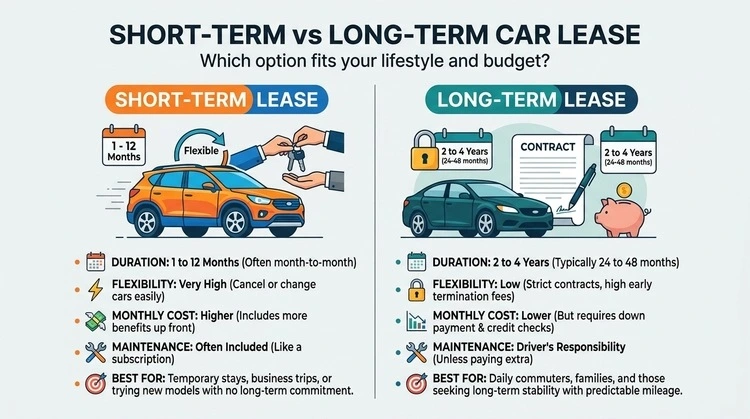
Every driver has a unique daily routine, and your commuting habits should heavily dictate your choice between a loan and a lease. Lease contracts come with strict annual mileage caps—typically sitting between ten thousand and fifteen thousand miles per year.
Exceeding these limits triggers steep financial penalties when you return the vehicle. If you frequently embark on cross-country road trips or have a massive daily commute, buying a car gives you total freedom without counting miles. On the other hand, if your driving habits are predictable and you primarily use your vehicle for local commuting and errands, a lease keeps you covered under the factory bumper-to-bumper warranty for the entire duration of your contract.
Making the Final Choice for Your Garage
Deciding whether to lease or buy ultimately boils down to your comfort level with vehicle ownership and technological change. Drivers who prefer keeping a car for a decade until the wheels fall off will always find better long-term value in traditional financing, because once the loan is paid off, your monthly transportation costs drop significantly.
However, if you love experiencing cutting-edge cabin tech, prefer lower monthly overhead, and want to avoid the headache of vehicle depreciation, leasing remains the smartest route. Weigh your driving habits, look closely at local manufacturer incentives, and choose the option that fits your financial comfort zone.
Maximize Your Trade-In Equity Separately
If you are currently driving a vehicle that you own or have positive equity on, do not hand it over blindly as a casual down payment on your new lease. Dealerships love rolling trade-ins into the leasing equation because it obscures the true financial breakdown of the transaction.
Instead, get independent cash purchase offers from online car-buying platforms and local pre-owned dealerships before visiting the lot. You can choose to take that cash payout directly or apply it strategically to your lease agreement. Separating the trade-in transaction from your new vehicle negotiation gives you tighter control over your total outlay and keeps you from losing money on the deal.
Negotiate Down or Waive Acquisition and Dealer Fees
When the final paperwork lands on your desk, you will likely spot a handful of administrative add-ons tucked into the itemized fees. These often include an acquisition fee charged by the financing institution, documentation fees, and dealer preparation charges.
While some acquisition fees are fixed by the captive lender, many dealer-specific charges are completely negotiable or subject to waiver. Politely ask the sales manager to strike out or discount these extra line items as a condition of closing the deal. If they want to move inventory off their lot today, they will usually find a way to absorb or reduce those unnecessary costs to earn your business.